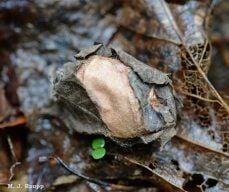
As fall starts to arrive, the familiar sound of rakes and leaf blowers will soon fill the air. This year, we invite you to try a simpler routine that your lower back will thank you for – leave the leaves. Those falling leaves form a living blanket that is vital to our local ecosystem, serving as a natural nursery for next spring’s wildlife.
Many native pollinators depend on leaf litter to survive freezing Illinois winters. Luna moth cocoons camouflage among fallen debris, while mated queen bumblebees burrow just beneath the leaf layer to hibernate. Firefly eggs and larvae are also dependent upon leaf litter.
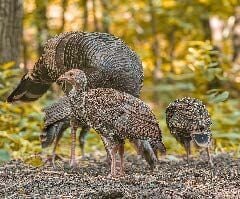
Ground-foraging birds like the brown thrasher and eastern towhee also depend heavily on leaf litter. Throughout the cold winter months, they flip leaves over to hunt for overwintering insects.
However, not all leaves are necessarily the best to leaf lying around. It can be beneficial to remove and limit certain types from your garden beds:
Black walnut: These leaves contain juglone, a natural chemical that acts as an herbicide. Juglone can stunt or kill sensitive garden plants like tomatoes, hydrangeas and berries, so these leaves should be raked away and composted.
Oak and sycamore: Because they are thick and decompose very slowly, heavy mats of these leaves can smother turf grass and delicate perennial sprouts if left in dense clumps. You can thin these and leave some while composting the rest.
For the rest of your yard, you can easily support wildlife without sacrificing your lawn:
Create leaf beds: Rake safe leaves into garden beds or around the base of trees to act as free winter mulch.
Compost the rest: Move black walnut and heavy oak and sycamore leaves into a separate compost pile. The juglone in walnut leaves naturally breaks down and neutralizes after two to four weeks of hot composting.
Designate a wild corner: Dedicate an out-of-the-way space where leaves can decompose naturally.
This fall, embrace a little intentional clutter. By managing your leaves, you can protect your garden plants while giving our county’s overwintering wildlife a safe place to stay.
This content is sourced from
Macon County Conservation District
. It reflects the author's views and has not been edited by our newsroom. It may have been generated using AI assistance.