


In the summer of 1730, at a site southeast of Arrowsmith in eastern McLean County, a combined force of French soldiers and their Native American allies laid siege to a doomed band of Fox Indians. The standoff, which lasted about three weeks, culminated in the Sept. 9 massacre of an estimated 500 or more Fox, including a large number of women and children.
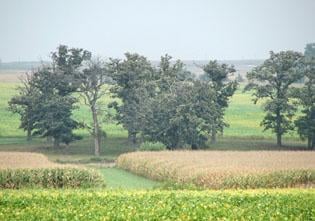
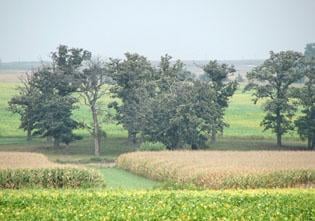
Today, the site of the Fox fort - now a peaceful landscape of scattered timber, farm fields, and the meandering Sangamon River - conceals well its violent and tragic history.
The fiercely independent Fox (known as the Mesquakie, or "People of the Red Earth") opposed French meddling of the fur trade, and skirmishes and raids eventually developed into open warfare. By the summer of 1730, the Mesquakie found themselves in east-central Illinois, on the run and hounded by Indian allies of the French.
The Fox decided to stop running and erect a "fort." This hastily, though skillfully, constructed fortification included a wooden palisade, burrows, and trenches. The Fox also made use of the natural landscape, namely the adjacent river and timber, to supplement their defensive works.
People are also reading…
Initially, Fox warriors were optimistic about their chances of waiting out an extended siege, as they had adequate supplies of gunpowder, lead, and provisions. Yet word of the fort soon reached French authorities, who dispatched to the site their own soldiers and traders, as well as more Indians.
During the three-week siege, the French-led cordon grew to some 1,400 men, consisting primarily of Native Americans, such as Kickapoos, Mascoutens, Potawatomis, Weas, and others.
Realizing the hopelessness of their situation, the Fox offered to lay down their arms and surrender. Yet the French, sensing the endgame was near, rebuffed any overtures for a peaceful settlement.
For those interested, this story is skillfully recounted in the 1993 book, "The Fox Wars," by R. David Edmunds and Joseph L. Peyser.
On the storm-darkened night of Sept.8, the disheartened Fox organized a breakout, though the cries of frightened Fox children gave them away. The French, concerned that a nighttime battle would end in chaos, decided to postpone their attack until the following day.
At morning's light, the exhausted Fox found themselves about 12 miles southwest of the now-abandoned fort. Yet their freedom proved all-too fleeting. Fox men and boys formed a skirmish line, hoping to give their women and children time enough to flee. "Grim-faced, some watched in silence as the French and their allies … advanced rapidly toward their position," noted Edmunds and Peyser.
"Other Foxes sang their death song. At least they would die as warriors."
The badly outnumbered Fox had no chance of victory on the open battlefield. In some ways, those killed were the lucky ones. Many Fox were taken prisoner, only to be tortured and burned to death.
Since the late 1800s, historians and archeologists have debated the location of the Fox fort. Amateur archeological excavations were made at the suspected site, a farm southeast of Arrowsmith along the Sangamon River, in 1897, and again in 1932 and 1934. Although material recovered from those digs included 200 lead balls and other telling items, doubts remained as to whether that was the site of the siege.
Today, the archeological work is significantly more sophisticated and precise.
Lenville J. Stelle, a professor from Parkland College in Champaign, has conducted archeological reconnaissance and excavations at the site since 1988. The work of Stelle and other archeologists, coupled with the discovery of a long lost French account of the siege, offer further evidence that the fort was indeed at the site of the previous digs.


