


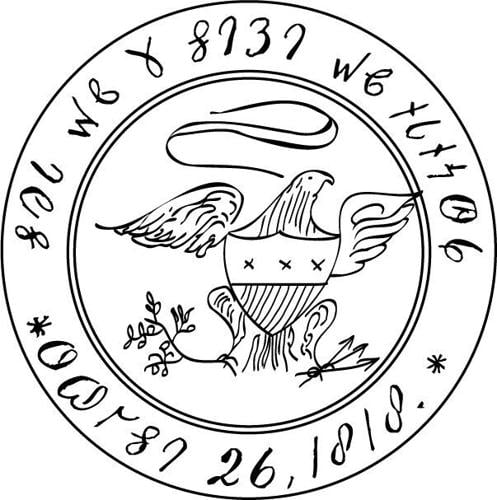
CHAMPAIGN, Ill. — Soon after the Church of Jesus Christ of Latter-day Saints moved its headquarters to what would become the Utah Territory, church president Brigham Young initiated a project to produce a new alphabet, one that would be both a more phonetically accurate depiction of the English language and a return to the pure language of God.
The alphabet was heavily promoted in the mid-19th century. But it was used only briefly and never enjoyed widespread acceptance.
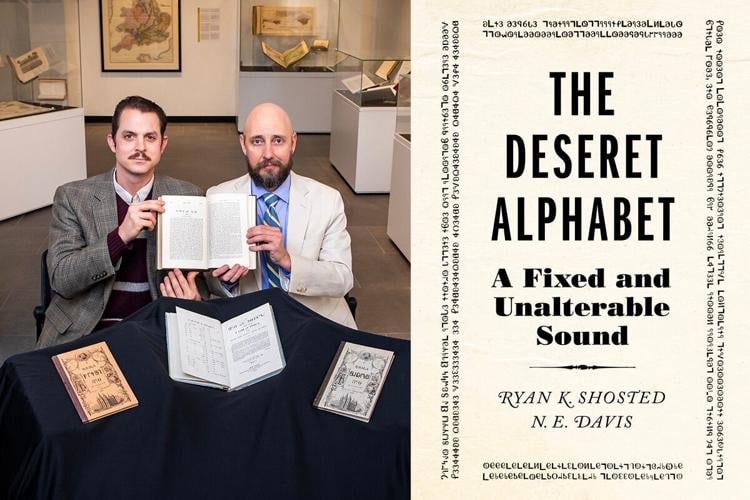
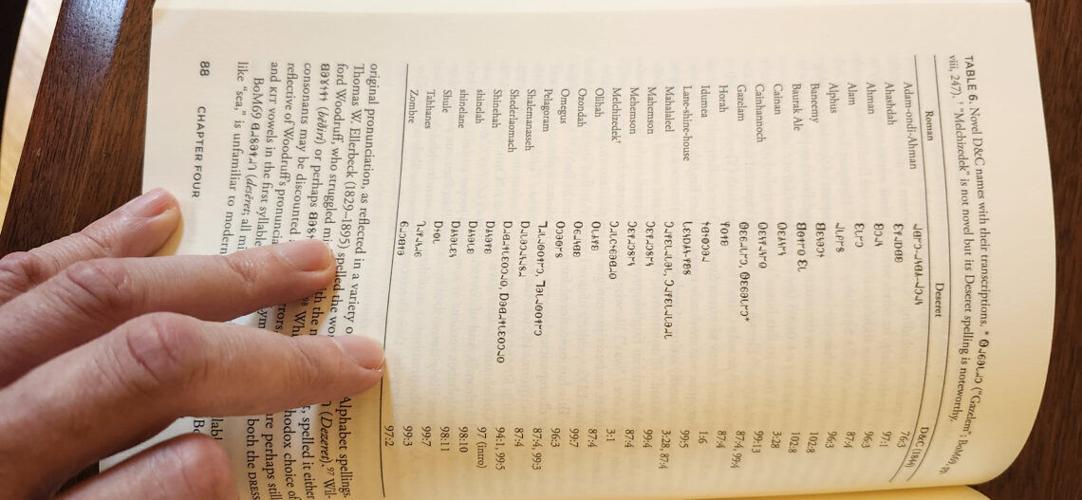
“The Deseret Alphabet: A Fixed and Unalterable Sound,” published by the University of Illinois Press, is the first book dedicated to the full story of the Deseret alphabet, which it describes as “a marvelous, ambitious, quixotic project to refound the English language as a mirror of the divine tongue.” The book, tracing the alphabet’s history and use, was written by University of Illinois Urbana-Champaign linguistics professor Ryan Shosted and engineer and computer language designer Neal Davis, a former computer science professor at Illinois.
People are also reading…
The alphabet was developed and used at a time when the Latter-day Saints moved from Nauvoo, Illinois, to what is now Utah and were struggling to survive in the desert. The authors wanted to know why the alphabet was so important to church followers that they would pursue it at a time of hardship.
“We have this wonderful, bizarre artifact and we’re trying to understand why it came to be,” Davis said.
The book outlines the practical, social and spiritual reasons behind the alphabet, which was created at a time of considerable interest in spelling reform in the United States and Europe. While that was an interest of the church as well, the book’s authors argue that the primary impetus for the development of the alphabet was theological and arose from founder Joseph Smith’s philosophy of language.
“From its beginnings, the Latter-day Saint movement has been rooted in the idea that language is supernaturally powerful,” they wrote.
The church’s founding texts reference the idea that language is broken or fallen and needs to be fixed, Shosted said.
“Mormons have their own kind of peculiar view on language. They believe that there was perfect language used by God and Adam and Eve, and that language was lost with the Tower of Babel,” he said. “But, critically, that language can now be redeemed and recharged.
“In the 19th century, Mormons were all about fixing things,” he said. “They were interested in perfecting various aspects of human endeavor to prepare the world for something greater, the second coming of Jesus Christ. Latter-day Saints participated actively in what they called ‘the restoration of all things.’ It’s a cherished and deeply held Mormon belief, and the Deseret alphabet is part of that restoration.”
Despite all this, Mormons of the 1860s and 1870s didn’t rush to use the Deseret alphabet, with the exception of some leading families and a few teachers. It was used for more than 25 years by the church, and most people who wrote in the Deseret alphabet were employed by the church in some capacity, Shosted said.
Non-Mormons used the alphabet as a cudgel against Mormons, claiming it would harm the education of children and that it was used by the church for secrecy. However, compared with the total volume of material written in the Deseret alphabet, the occasions when it was actually used to conceal information are negligible, Shosted said. By the 1860s, the key to the alphabet was widely published, so using it for secrecy was no longer an issue, he said.
The alphabet’s creation was shaped by many people over the years who were interested in different purposes. One motivation was economic. Paper and ink were scarce, and church followers built their own paper mill and collected rags for paper production, Shosted said.
“Like other religious movements born in the 19th century, Mormons were extremely interested in printing to promote their message,” Shosted said, and church leaders believed spelling reform would allow text to be printed more economically.
Education was a priority for the Latter-day Saints, and they were interested in how the alphabet could make it easier to teach English to children and to non-English-speaking immigrants to the Great Basin.
During their research, Shosted and Davis read documents written more than 100 years ago in an early form of the Deseret alphabet. They uncovered the earliest known document written in Deseret, and they found contradictory evidence, presented in the book, about who invented the alphabet.
Davis said he was fascinated to learn about the ties of the alphabet to a myth about Welsh descendants that settled in North America in pre-Colonial times and about Native American tribes that spoke Welsh. A primary source of the Deseret alphabet was a purported Welsh druidic alphabet. Documents written in Deseret were brought to the Hopi people of northern Arizona in the hope they might be able to read it because of its derivation from Welsh, Davis said. The Hopi language was written for the first time in the Deseret alphabet, he said.
Shosted and Davis said one of their goals in writing the book is to help make the Deseret alphabet more widely accessible. Although obscure, the alphabet never disappeared, and there has been a resurgence of interest in it, thanks to digital technology. It is included in Unicode, which represents the writing systems of the world’s languages on computers, and Deseret fonts are available online.
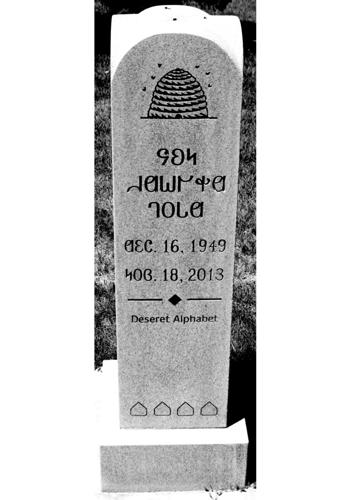
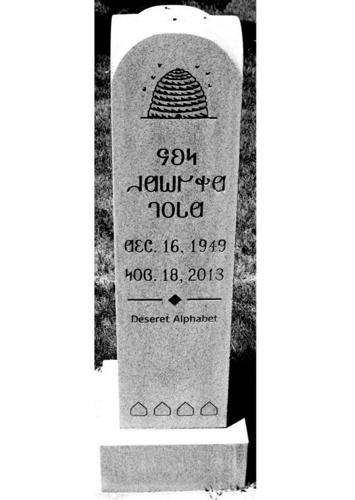
Today the alphabet is used primarily by enthusiasts, including artists, Davis said. It has been used by a game developer who makes text-based video games, and a set of classic novels has been published in Deseret. Shosted said millennials are interested in the alphabet as a signifier of their Mormon cultural identity. “The alphabet helps ‘keep Mormonism weird,’” he and Davis wrote in the book.
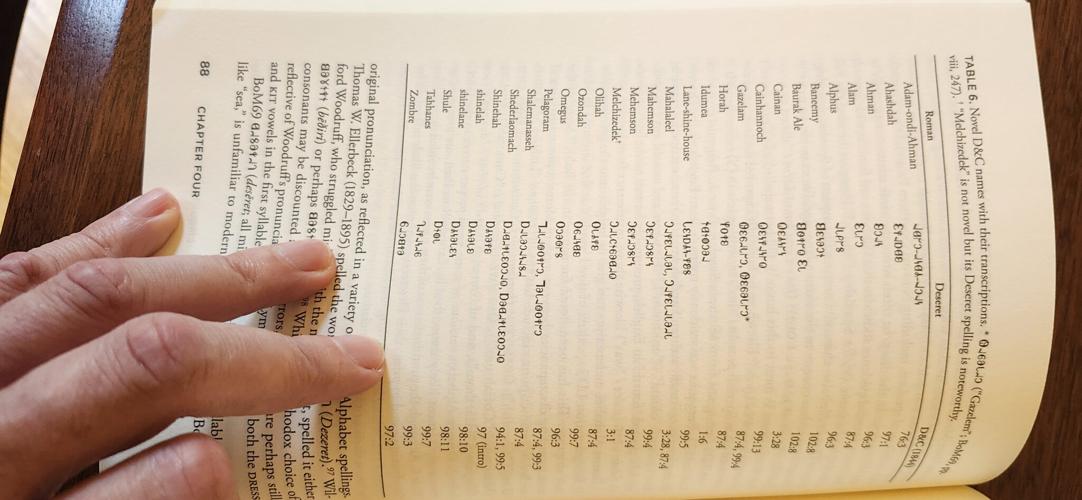
The authors created the Illinois Deseret Consortium research archive, which makes online searchable transcriptions of texts written in Deseret available. It will eventually include transcriptions of thousands of pages of printed and handwritten Deseret alphabet material, and it currently catalogs 4,500 individual word entries, with spelling variants, in its lexicon. It recently published a transcription of the Book of Mormon written in 1869 in the Deseret alphabet, making it text-searchable for the first time. Davis created the font for the Deseret alphabet that is used in the book, and it is freely available on the website.
“Along with other community members, we are hopeful that the alphabet will be revived and used more frequently. We aim to provide the tools that people need to use the alphabet in an authentic way,” Shosted said. “It’s a wonderful cultural artifact, and we hope people with and without historic ties to the Deseret alphabet will be excited about it and learn how to use it.”


