


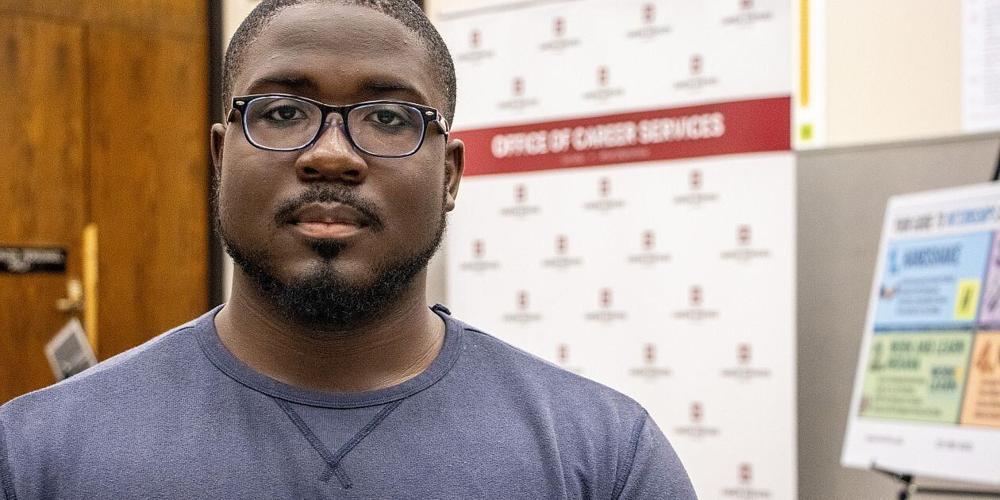
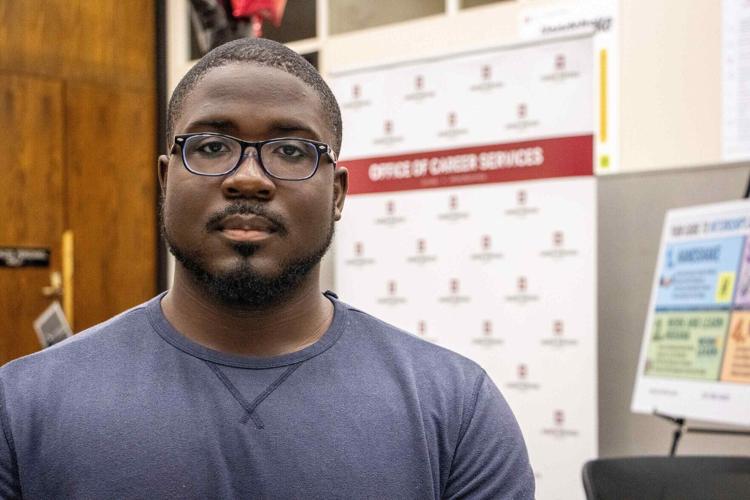

Two and a half years ago, Isiah Wilson was ready to quit college.
The Northwest Indiana native was attending college in Michigan. While the campus was welcoming, Wilson knew he was holding back when it came to connecting with others. He struggled academically and saw himself missing out on the college experience.
Still grieving the loss of his brother a year earlier, Wilson felt isolated. Just hours away from his family, he felt like he was in a whole different world.
“I was running,” Wilson said. “I had moved to Michigan and went to school there, but I was falling behind in my classes. I was often distracted, felt overwhelmed and was trying to hide myself away. I couldn’t see a future for me if I couldn’t see tomorrow. I remember thinking, ‘I’m probably just going to drop out of college.’”
Reflecting on his freshman year, Wilson — now a senior biochemistry major at Indiana University Northwest — is amazed by his transformation since returning home.
People are also reading…
That transformation started when he decided to give higher education another chance close to home at IU Northwest.
As a work-study student in the IU Northwest Office of Career Services, he discovered a program that would change his outlook entirely. A chance connection with a mentor gave him the tools to help himself in life and in the classroom, showing him a future he was blinded to years earlier.
The mentor-mentee program was designed to pair students with experienced alumni and professional leaders. Still struggling to balance academics and personal stress, Wilson was matched with Dr. Kiana Player, an IU Northwest alumna currently serving as chief nurse executive within an integrated health system in California.
Wilson initially thought Player would help him navigate coursework or offer basic career advice. What began as routine guidance quickly turned into a transformative relationship.
When Player first spoke with Wilson, she recognized his intelligence immediately, but she also noticed his self-doubt and heavy load of personal responsibilities.
“The first discussions were less about helping him navigate the academic space and more about how to navigate his multiple competing priorities,” Player said. “I had to help him understand how to disconnect and make time for himself so he could remain whole.”
Player encouraged Wilson to focus on his well-being, including sleep, nutrition and stress management, before tackling his heavy academic schedule, reminding him he didn’t have to carry everything alone.
Building a relationship with someone who offered judgment-free guidance allowed Wilson to rethink his approach to school and life.
“She felt very much like a friend or someone I could confide in without fear of judgment,” Wilson said. “It was because of her that I started doing better in my chemistry classes.”
Player urged Wilson to step out of his comfort zone and utilize campus resources, including tutoring services and direct conversations with professors during office hours. The shift in approach transformed his performance in challenging courses like physics and inorganic chemistry, while helping him build strong professional networks on campus.
“Half of my relationships with my professors are because of Dr. Player’s advice to go see them,” Wilson said.
Set to graduate this winter, Wilson’s career aspirations look vastly different than they did during his freshman year. He is actively conducting undergraduate cancer research with faculty on campus and serving in leadership positions in student organizations.
His goal is to attend graduate school and become a physician assistant so he can serve communities across the Midwest.
Despite relocating to the West Coast earlier this year, Player stays in touch with Wilson and remains a passionate advocate for mentorship at IU Northwest. While their check-ins are less frequent now, both see that as a sign of his growing independence.
“When you’re a mentor, it’s important that you’re transparent about your own challenges so that you remain relatable,” Player said. “Nobody has it figured out perfectly. Having someone to help you get through when it’s tough is super important so you’re not in it alone.”
Player, who still relies on her own mentor, didn’t hesitate when Director of Career Services Diava Carter asked her to join the program.
“If you have success after your program is done, don’t forget to reach back and help pull someone else up,” Player said.
For Wilson, the past two and a half years represent more than progress toward a degree; they mark a complete personal transformation.
“It feels like I’ve lived a whole life in two and a half years,” Wilson said. “It was because of Dr. Player as well as many others that I’m where I am today.”


