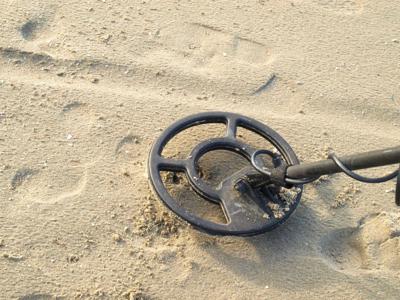



Photo provided by DepositPhotos
Every summer, wedding bands and engagement rings disappear into the surf by the thousands. Almost none of them are covered by insurance. So where do they go, and why do so many find their way home anyway?
The answer runs through a 17-year-old volunteer directory called The Ring Finders, whose members have recorded more than 19,000 recoveries, according to the organization. Most requests involve rings pulled from beaches, parks, lakes, and yards, often within hours of a panicked phone call.
Beaches Take In 3.4 Billion Visits a Year, and Salt Water Loosens Rings
A 2024 peer-reviewed analysis published in Shore & Beach estimates Americans make about 3.4 billion beach visits annually, spending roughly $240 billion along the way. That is a lot of hands in the water.
People are also reading…
The physics work against every one of them. Cold water constricts fingers, loosening a ring that fits snugly in the parking lot, and sunscreen coats the band like a lubricant. Once a ring hits dry sand, it disappears in seconds, then keeps sinking with every footstep and tide. Detectorists who work recoveries describe the same story on repeat: a game of catch in waist-deep water, then a sudden lightness on the finger and a search area the size of a tennis court.
The Average Engagement Ring Costs $4,600, and Insurance Rarely Pays for the Ocean's Share
The stakes have quietly climbed. The Knot's latest jewelry study puts the average engagement ring at $5,200. Even a plain 14-karat band carries more melt worth than it did a few years ago: gold trades above $4,300 per ounce in 2026, more than double the price when it first crossed $2,000 in August 2020.
Most beachgoers assume insurance would soften that loss. It usually won't. According to the Insurance Information Institute, standard homeowners and renters policies typically cap jewelry theft coverage at $1,000 to $2,000 total, and a ring that simply slips off in the waves is not a theft. Accidental loss falls under what insurers call mysterious disappearance, which standard policies rarely cover without a separate scheduled endorsement. For an uninsured ring in the surf, recovery is not a backup plan. It is the only plan.
Salt Water Confuses Ordinary Detectors, So Recovery Work Runs on Specialized Gear
Wet salt sand conducts electricity, which makes it read like one enormous target to a basic single-frequency detector. The machines behind most surf recoveries are beach metal detectors built for exactly this problem: multi-frequency models that subtract the salt signal while keeping small gold audible, and pulse induction units that punch through mineralized ground for depth.
The broader metal detector market spans everything from entry-level park machines to submersible units rated for diving, but salt-stable technology is the difference on wet sand, where ordinary machines either chatter constantly or go quiet.
Rising Metal Prices Are Turning a Hobby Into a Public Service
The economics of the hobby have shifted underneath it. When gold sat below $2,000 an ounce, beach detecting was mostly a pastime with occasional windfalls. At today's prices, every recovered band represents real money, and the decision to hand it back rather than melt it down carries more weight than it did five years ago. Nineteen thousand returns suggests the volunteer model is holding.
That matters beyond the jewelry itself. Beach tourism anchors coastal economies from the Outer Banks to the Pacific Northwest, and the recovery network now spans it: members list their own cities, set their own terms, and take calls from travelers who fly home before the search even ends. Recent Ring Finders logs include a visitor from Switzerland reunited with a ring lost at an Ontario beach the same afternoon.